French Drains Explained: Costs, Mistakes, and When NOT to Use One
September 16, 2026
8 min read
A soggy section of lawn can make installing a French drain seem like the obvious next move. However, this drainage system solves a specific type of water problem, and using one in the wrong situation can leave you with the same puddle plus a trench full of stone. At Elite Pavers Solutions, we believe the starting point should be identifying where the water comes from and where it has a realistic place to go.
That distinction matters in Southwest Florida, where heavy rain, shallow groundwater, roof runoff, paved surfaces, and changing lot elevations can create very different drainage problems. A French drain can help manage water moving through saturated soil, but it is not a universal replacement for grading, surface drains, gutters, or other drainage methods.
What Does a French Drain Actually Do?
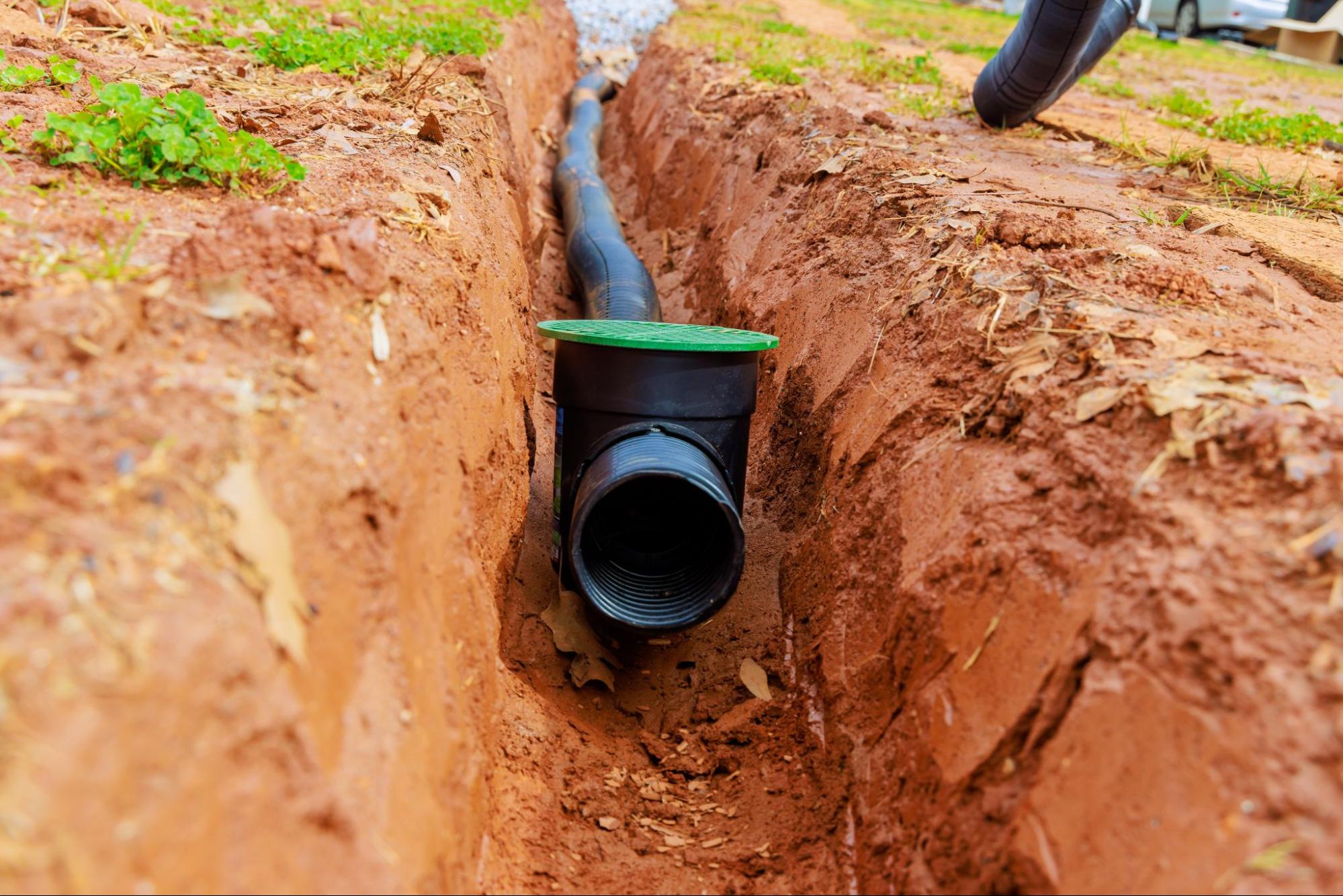
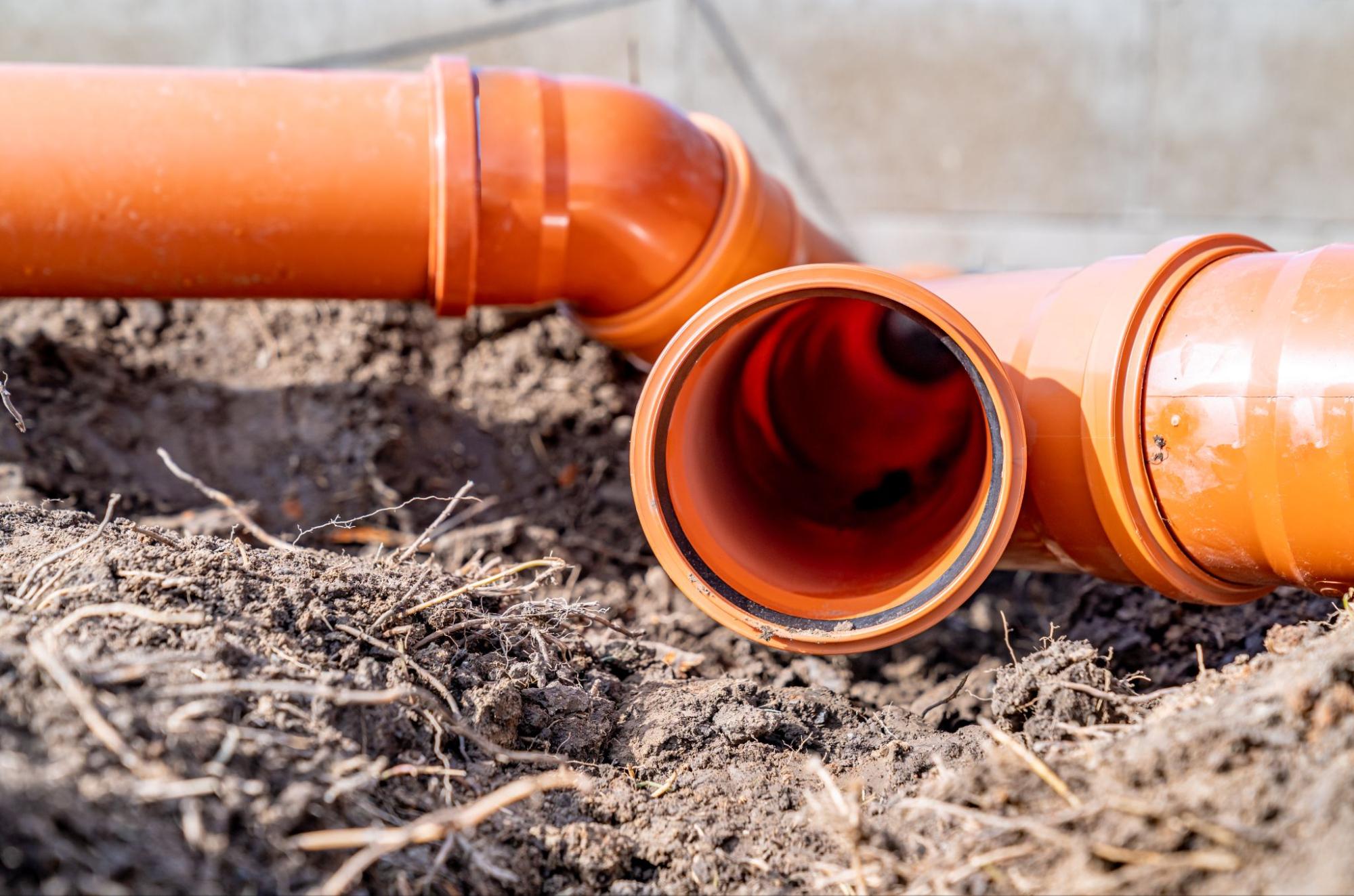
Despite the name, a French drain is usually not a drain with an open grate at the surface. It is a gravel-filled trench containing perforated pipe that collects water moving through the surrounding soil.
Water enters the stone-filled trench and flows into openings in the pipe. The pipe then carries it toward a lower discharge location. Gravity does most of the work, so the route and outlet matter as much as the trench itself.
This makes a French drain for yard drainage particularly useful where subsurface moisture needs an easier route through an area. It is less suited to catching large amounts of water rushing across a hard surface because that water must first enter the ground and filter through the stone.
How Much Does a French Drain Cost?
French drain costs vary considerably because trench length tells only part of the story. Excavation depth, accessibility, soil conditions, disposal, pipe size, aggregate quantity, landscape restoration, and the difficulty of establishing an outlet all affect the final price.
As a broad planning range, residential exterior systems may cost roughly $20 to $50 per linear foot, while difficult excavation, deeper trenches, limited equipment access, or extensive restoration can push pricing higher. A 50-foot installation might therefore land around $1,000 to $2,500 or more, while a longer or complicated project can cost several thousand dollars.
Price comparisons work best when the scope is comparable. One estimate may include excavation, washed stone, perforated pipe, fabric, disposal, an outlet, and landscape restoration, while another covers only the trench and pipe. Looking at the actual components helps explain why two estimates for the same number of feet can differ substantially.
What Goes Inside a French Drain?
A functioning system depends on several components working together. Leaving out one can slow how quickly water enters the drain or reduce how long the system remains useful.
Washed Gravel Creates Space for Water
Clean, washed stone is generally preferred because the spaces between pieces allow water to travel through the trench. Aggregate containing a large amount of sand, stone dust, or other fine material fills those openings and reduces the available pathways.
A common choice is angular washed stone around 3/4 inch, although specifications vary by application. The key is to keep the aggregate relatively open rather than compacting into a dense layer that slows water movement.
Perforated Pipe Collects and Carries Water
The pipe provides a lower resistance route once water enters the trench. Perforations allow groundwater to enter along the length of the system instead of requiring everything to reach one opening.
Pipe placement and orientation depend on the product being used, so installation should follow the requirements for that specific pipe. More importantly, the pipe needs continuous fall toward its outlet. A pipe that rises and falls along the trench can retain water in low sections instead of moving it consistently.
Fabric Separates Soil From the Stone
Geotextile fabric helps keep surrounding soil from migrating into the open spaces between the aggregate. Without separation, fine particles can gradually enter the stone reservoir and reduce the amount of open space available for water movement.
The fabric should allow water through while limiting soil migration. Wrapping the system without considering the fabric type can create its own problems, so this component needs to match the drainage application rather than serving as a generic liner.
How Far Should a French Drain Be From the House?
No universal distance works for every property. The location depends on what the drain is intended to intercept, foundation conditions, roof runoff, available elevations, underground utilities, and where the collected water can discharge.
A system designed to intercept groundwater moving toward a structure may need a different location from one intended to dry a wet section of yard. Digging directly beside a foundation without understanding footing depth or surrounding conditions can create unnecessary risk.
The outlet also influences placement. A trench can collect plenty of water, but if no lower location is available for discharge, the system may simply store water until the surrounding soil catches up. That is especially relevant on flat Southwest Florida lots where a few inches of elevation can determine whether gravity drainage is feasible.
The Outlet Is the Part You Cannot Ignore
A surprisingly common planning mistake is focusing on where the trench begins instead of where it ends. Every gallon collected needs a destination.
Possible discharge arrangements depend on site conditions and local requirements. In some situations, gravity can carry water toward an acceptable lower area. Other properties may have limited options because the yard is flat, the water table is high, or neighboring lots sit close to the intended route.
Never treat the outlet as an afterthought once excavation has started. If you cannot identify a realistic destination for the water, reconsider the system before installing dozens of feet of pipe.
Common French Drain Mistakes That Reduce Performance
Many French drain mistakes happen because people treat the trench as a simple pipe-burial project. Water movement is less forgiving than that.
Using aggregate packed with fines can reduce infiltration into the trench. Installing pipe without continuous fall can leave sections holding water. Failing to separate soil from the aggregate may allow sediment to fill open spaces over time.
Another mistake is placing the drain where the water is visible rather than where it originates. The wettest spot in the lawn may be the final destination of runoff coming from somewhere else. Intercepting the water earlier in its path may require less excavation and produce a more useful result.
Finally, surface elevations still matter. A subsurface drain should not become an excuse to ignore grading, roof discharge, or runoff from adjacent pavement.
When a French Drain Is NOT the Right Solution
A drainage system works best when it matches the type of water you need to manage. Several common problems call for a different approach.
Fast Surface Runoff Needs Faster Collection
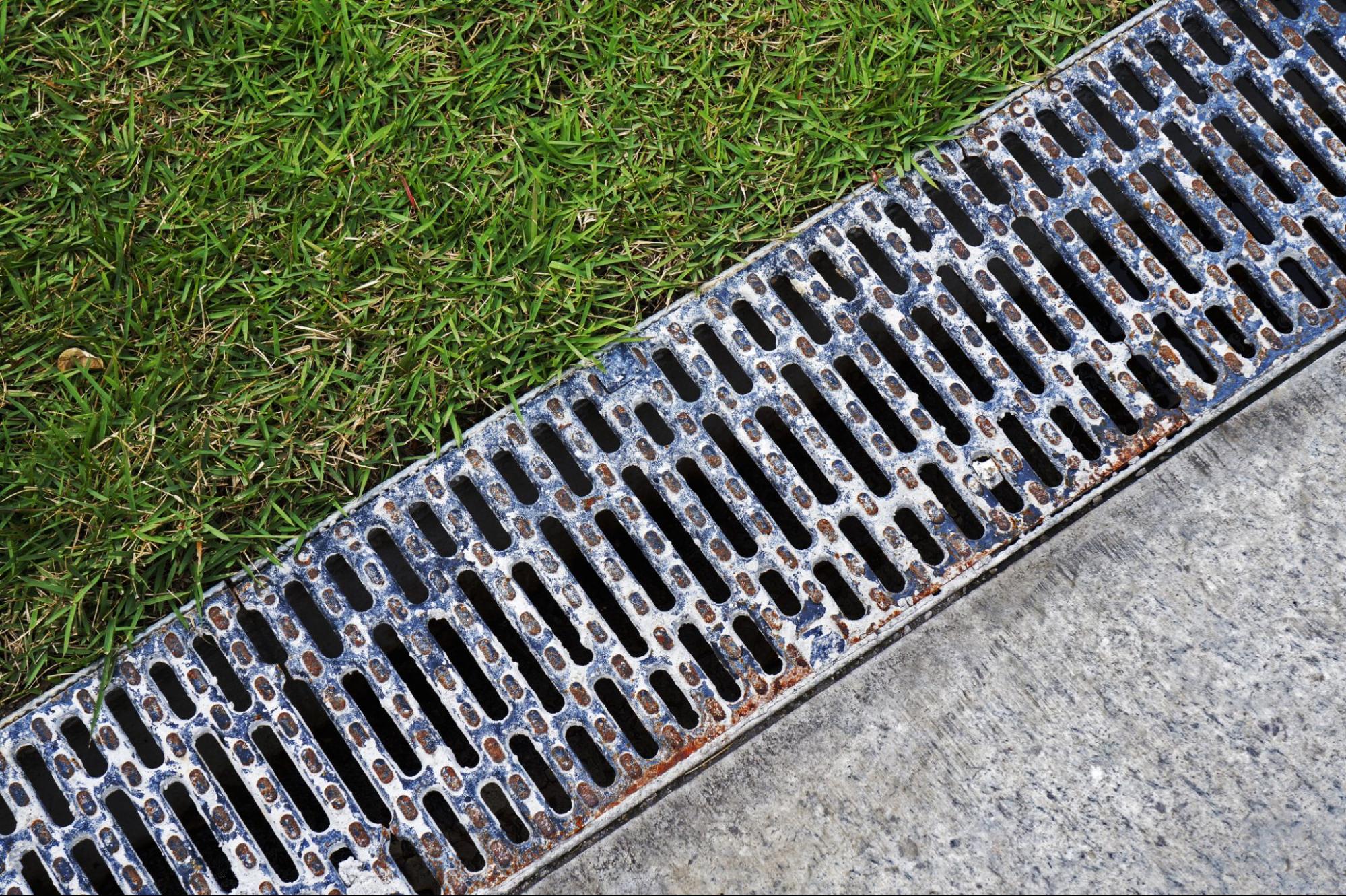
Water rushing across a driveway, pool deck, or patio may pass over a buried French drain before enough filters into the trench. A channel drain or catch basin can collect surface flow directly through an exposed inlet.
This is especially relevant during intense storms. If gallons of water move across hardscape in seconds, asking it to soak through soil and gravel first adds an unnecessary step.
Roof Water Should Usually Be Controlled at the Source
A downspout releasing concentrated roof runoff beside a patio can overwhelm the surrounding soil. Installing a French drain beneath the wet area treats the water after it has already reached the ground.
Redirecting that discharge through an appropriate solid pipe or another roof drainage arrangement may offer a more direct route. Keeping concentrated roof water separate from groundwater collection also makes each system's job easier to understand.
A High Water Table Changes What Is Possible
A French drain depends on having a lower point for collected water to travel to. If groundwater is already near the surface and the proposed outlet cannot sit below the collection area, gravity has little elevation to work with.
In that situation, simply digging a deeper trench may not solve the problem. Before deciding whether a buried drain is practical, consider site elevation, seasonal groundwater conditions, and available discharge points.
What About EZ Drains and Dutch Drains?
Alternative systems sometimes appear under names such as EZ drain or Dutch drain, but the terminology can vary. Understanding the actual construction is more useful than relying on the label.
Prefabricated EZ-style products commonly combine perforated pipe with lightweight aggregate contained inside a fabric sleeve. Their design can reduce the amount of loose stone that needs to be transported and placed, which may simplify installation in certain locations.
The term Dutch drain sometimes refers to a gravel-filled drainage trench that may have a simpler configuration than a traditional piped French drain. Because contractors and regions don't always use these names consistently, ask what materials, pipe, fabric, depth, slope, and outlet are included before comparing systems.
Build a Drainage Plan Around Your Property
Wet areas deserve more investigation than simply choosing the most familiar drainage product. Understanding the source, route, volume, and destination of the water gives you a much clearer picture of what the project actually needs.
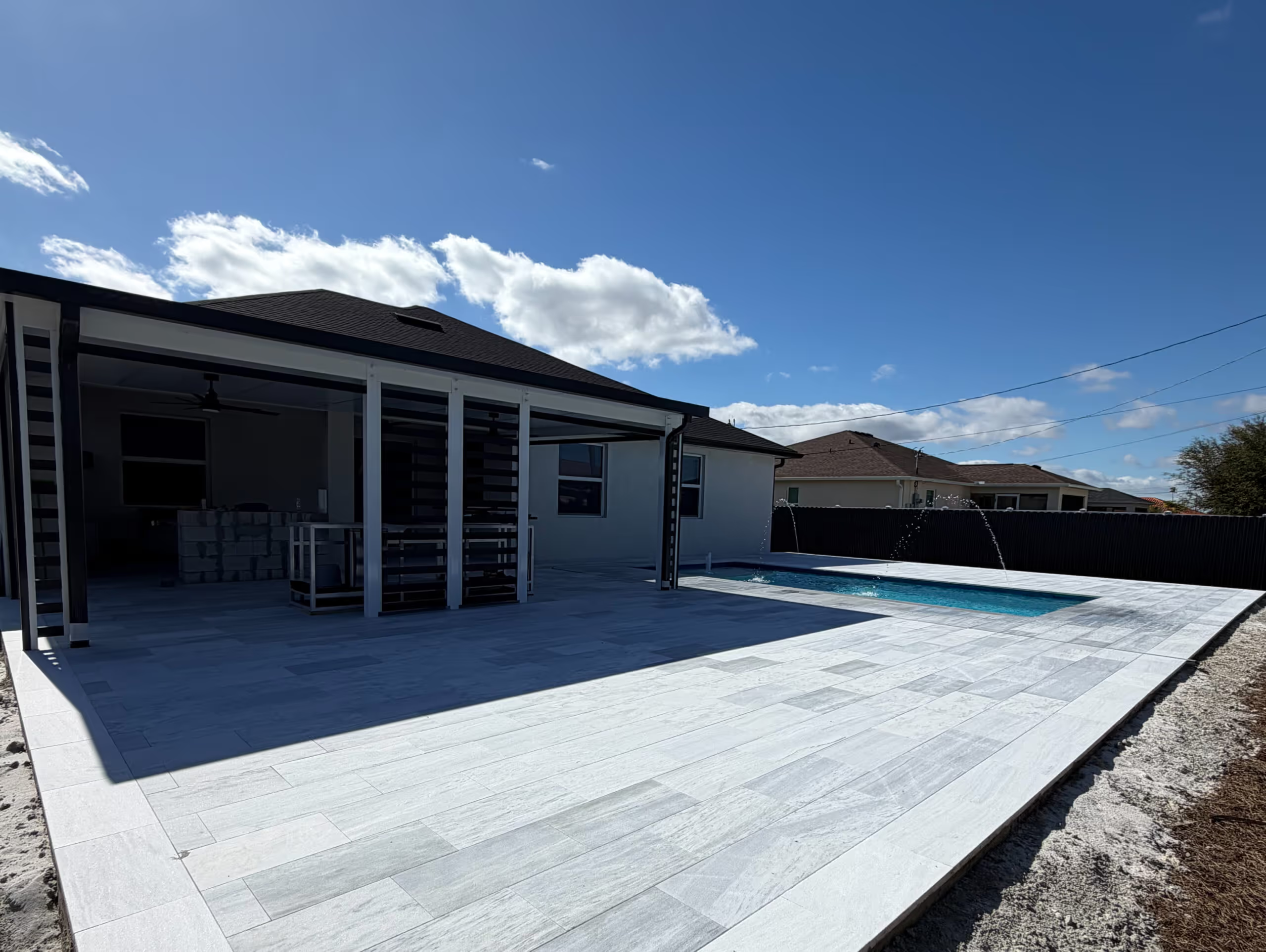
If drainage is affecting a patio, driveway, walkway, or surrounding landscape, Elite Pavers Solutions can evaluate how the hardscape and water flow interact across the area. Contact us today to discuss your project with our paving contractors and explore a drainage approach based on your property's conditions.
Frequently Asked Questions
Can plants or tree roots eventually enter a French drain?
Roots naturally grow toward areas where moisture remains available, so they may reach drainage trenches over time, particularly near established trees and aggressive plant species.
Can a French drain cross underneath a walkway?
Yes, but the crossing must account for the walkway's foundation and the drainage pipe below it. Excavating beneath existing hardscape may require removing and rebuilding part of the surface so the pipe receives the required elevation without leaving unsupported material beneath the walkway.
Does a French drain need a visible opening at the beginning?
Not necessarily. Unlike a catch basin, the system can collect subsurface water along the length of its stone-filled trench without an exposed inlet.
Keep Building Your Southwest Florida Paver Know How
Visit the Elite Pavers Solutions blog for more practical guides covering paver bases, installation mistakes, patio costs, material comparisons, water management, repairs, and other decisions that can help you plan your next outdoor project with fewer surprises.
GOT A PAVER PROJECT IN MIND?
Free estimates across Cape Coral, Fort Myers, Naples and beyond.

.webp)