Do Pavers Need Drainage? What Happens When Water Gets Underneath
September 2, 2026
8 min read
Pavers spend their entire lives outdoors, so water getting around and beneath them is inevitable. The important question is what happens to that water afterward. At Elite Pavers Solutions, we include paver drainage in the installation plan because Southwest Florida patios, walkways, and driveways routinely face heavy rain that can expose weaknesses beneath the finished surface.
However, finding moisture below a paver does not automatically mean something has gone wrong. A patio is not supposed to create a waterproof barrier over the ground. Problems develop when water repeatedly collects where it should not, carries supporting material away, or has no practical route out of the area.
Where Does Water Go When It Gets Under Pavers?
Pavers have joints between individual units, which means some rainwater can reach the materials below the surface. Water may also enter along an exposed edge or migrate from saturated surrounding soil.
Once it reaches the bedding layer, gravity continues pulling it downward. A stable installation gives that moisture a route through or away from the supporting materials without allowing the base to lose its structure.
Some Water Below the Surface Is Expected
Finding water under pavers is different from having a drainage failure. Outdoor paving gets wet, and small amounts of moisture moving through joints are part of normal exposure to rainfall.
Trouble starts when water remains concentrated in one location or repeatedly flows through the base with enough force to move fine material. That distinction matters because preventing every drop of water from reaching the subsurface is neither realistic nor necessary.
The Base Has to Keep Its Structure When Wet
The materials underneath the pavers must keep supporting the surface after rainfall. If water causes fine particles to migrate, washes material toward an exposed edge, or repeatedly saturates weak underlying soil, support can become inconsistent.
Once one area loses support, the pavers above may settle while neighboring sections stay at their original elevation. What begins below ground eventually becomes visible as a dip, uneven joint lines, or a spot that collects water after every storm.
Why Southwest Florida Rain Changes the Conversation
A short afternoon storm can drop a considerable amount of water onto a patio in very little time. A 500-square-foot paved area receiving one inch of rain gets roughly 312 gallons of water from direct rainfall alone. Add roof runoff or water arriving from higher parts of the yard, and the amount moving through one area climbs quickly.
That volume is why drainage under pavers needs to account for more than ordinary light rain. A surface that looks fine in dry weather may reveal its weaknesses when several inches of rain fall over a short period.
Local soil conditions add another variable. Sandy soils may drain quickly in some locations, while compacted soil, fill material, or a seasonally high water table can slow infiltration elsewhere. Two patios only a few miles apart can therefore experience water very differently.
What Poor Drainage Can Do Beneath the Surface
Water itself doesn't simply lift a patio apart when it rains. The bigger concern is what repeated water movement can do to the materials supporting the pavers.
Base Material Can Migrate
Flowing water can carry smaller particles into surrounding soil or toward an unprotected edge. As material leaves one location, small voids develop, and the support beneath individual pavers becomes less uniform.
This process may happen slowly, which makes it easy to miss at first. Eventually, a chair may wobble in a spot that used to be level, or one row of pavers may sit noticeably lower than the rest.
Saturated Soil Can Lose Supporting Strength
Native soil beneath the constructed base also affects the pavement. When certain soils remain saturated, their ability to support the weight above can change, especially if the area was not prepared with those conditions in mind.
The result may be broader settlement rather than one isolated sunken paver. Correcting that type of issue often requires looking beneath the visible surface instead of repeatedly adding sand and resetting the same low area.
Uncontrolled Water Can Find the Edges
Edges deserve attention because they are transition points between the paved structure and the surrounding landscape. Concentrated runoff moving toward an exposed edge can carry bedding or base material with it if the area lacks sufficient containment.
Once material begins escaping, outer pavers can loosen or move outward. The problem may then progress inward as neighboring units lose the tight arrangement that helps keep the pavement stable.
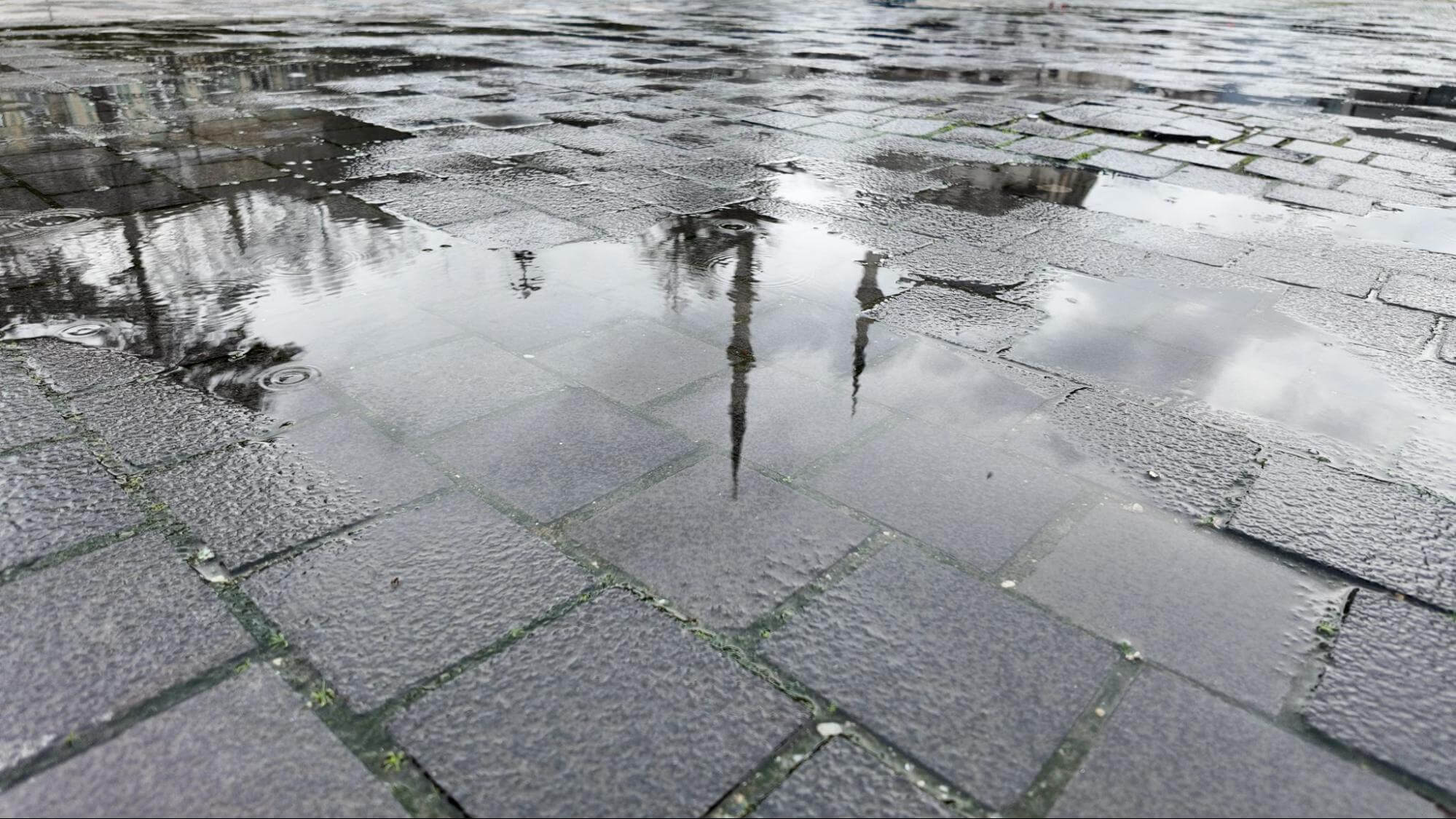
A Puddle Does Not Always Tell You Where the Problem Started
Seeing water on top of a patio makes the low spot obvious, but it does not necessarily identify the original cause. The depression may have developed because the supporting material settled, because runoff continually crosses that area, or because the surface was built with insufficient pitch.
For that reason, filling a low spot without investigating why it formed can become a temporary fix. If water continues reaching the same area or the material below keeps moving, the depression can return.
Patterns provide useful clues. Water that consistently appears beside a roof downspout suggests a different issue from a long puddle stretching across the entire patio edge. Observing where water enters during a storm can reveal much more than inspecting the patio several hours after the rain stops.
Good Paver Base Drainage Starts Before the Pavers Go Down
Drainage decisions are easiest to make while the site is still being prepared. At that stage, installers can examine elevations around the house, determine where runoff currently travels, and establish the finished height of the new pavement.
The surface needs enough pitch to move water toward an appropriate destination rather than trapping it against the house or sending it somewhere that creates a new problem. Meanwhile, the construction below must remain stable when moisture reaches it.
This is also where base preparation connects directly with drainage. Excavation depth, soil conditions, base materials, compaction, and edge construction all influence how the installation responds when the ground gets wet. Paver base drainage isn't a single product added at the end of the job. It comes from designing the complete pavement around the conditions at that location.
More Drainage Is Not Automatically Better
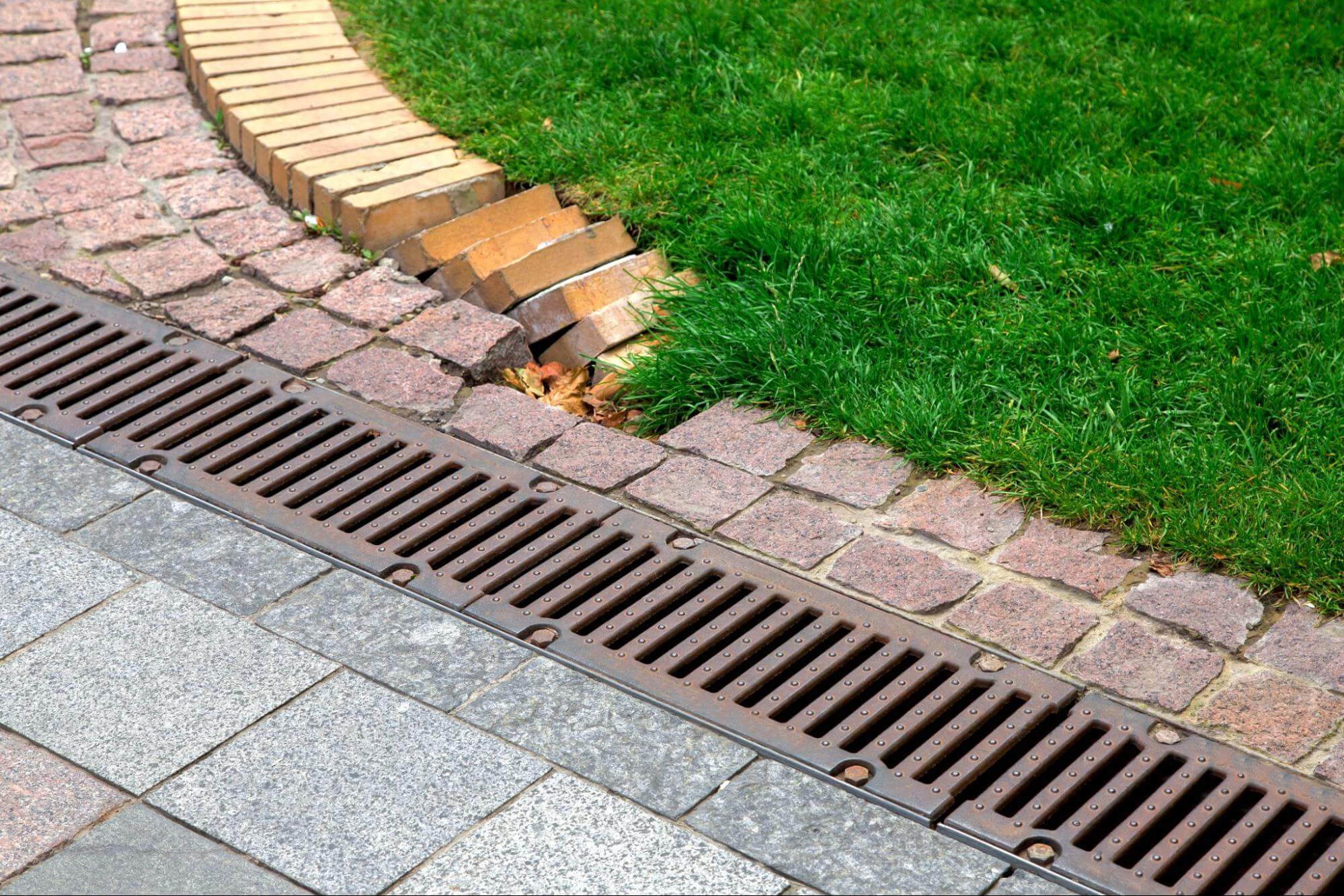
When homeowners experience standing water, adding a drain can feel like the obvious answer. However, a drain only helps when it collects water from the right location and has somewhere suitable to discharge it.
For example, installing a drain in a low patio won't fix why the patio settled. Likewise, adding an underground pipe does little if its outlet sits at nearly the same elevation as the inlet and cannot move water by gravity.
Sometimes adjusting surface elevations provides the simpler answer. Other properties may benefit from a channel drain, catch basin, permeable area, or another system. The goal is not to install as many drainage components as possible. It is to identify how water moves across the site and choose a method that gives it a workable route.
Existing Paver Drainage Problems Need a Cause, Not Just a Repair
If an established patio or driveway starts developing drainage trouble, examining the symptom is only the beginning. You can lift and reset a sunken section, but the fix won't last if runoff keeps washing away the material beneath it.
Look at what surrounds the affected area. Roof discharge, landscape beds, irrigation, neighboring elevations, pool equipment, and changes made elsewhere in the yard can alter how much water reaches the pavement.
Timing also provides clues. A patio that has remained stable for years and suddenly develops drainage problems deserves a different investigation from one that started collecting water shortly after the paver installation. The first may involve a changed site condition, while the second may point toward elevation, base, or drainage decisions made during construction.
Patio Drainage Should Work With the Rest of the Property
A patio does not exist in isolation. Water leaving the pavers still has to interact with the house, lawn, landscaping, pool area, driveway, and neighboring property.
Effective patio drainage therefore requires thinking beyond the edge of the hardscape. Sending water away from the house is helpful, but directing that same runoff into another low area simply relocates the puddle. The destination matters as much as the route.
This is especially important when adding a patio to an established yard. New hardscape changes the surface water can infiltrate through and may redirect runoff that previously followed another path. Looking at the entire area before choosing elevations helps prevent the new patio from creating drainage issues elsewhere.
Get the Water Moving in the Right Direction
If your patio, driveway, pool deck, or walkway develops recurring puddles or settling, the visible symptom only tells part of the story. Elite Pavers Solutions can examine the paved area, surrounding elevations, base conditions, and runoff sources to determine why water keeps collecting or where support may be changing.
Contact us today to schedule an evaluation with our paving contractors. Understanding where the water originates and where it needs to go gives you a much better starting point than repeatedly repairing the same wet spot.
Frequently Asked Questions
Can irrigation systems cause problems around a paver patio?
Yes. Misaligned sprinkler heads can repeatedly saturate one edge of a patio even when rainfall is limited, while broken irrigation lines may introduce water below the surface without creating an obvious spray. Checking irrigation operation can help rule out an artificial water source when unexplained wet areas appear.
Can tree roots affect drainage around existing pavers?
Yes. Growing roots can change surface elevations and alter the route runoff follows across an older patio or walkway. Removing a root isn't always the answer because it may affect the tree, so consider the paving and landscaping together before choosing a correction.
Should drainage be reconsidered when expanding an existing patio?
Yes. An addition increases the amount of hard surface and may change where rainfall travels around the yard. Before extending the patio, review the existing slope and runoff destination so the new section does not block an established drainage path or send additional water toward another structure.
See What Good Patio Drainage Actually Looks Like
Knowing why water causes trouble beneath pavers is the first half of the drainage conversation. Next, read Paver Patio Drainage Done Right: Slope, Placement & What It Should Look Like to see how surface pitch, patio elevation, runoff direction, and drainage placement come together during an installation.
GOT A PAVER PROJECT IN MIND?
Free estimates across Cape Coral, Fort Myers, Naples and beyond.

.webp)