Paver Patio Drainage Done Right: Slope, Placement & What It Should Look Like
September 9, 2026
8 min read
A patio does not need an obvious drain in the middle to manage rain successfully. In fact, some of the most important decisions involving paver patio drainage happen before the first paver goes down. At Elite Pavers Solutions, we review elevations, runoff sources, surrounding structures, and where the water goes so the finished surface directs rainfall where it needs to go.
That planning matters in Southwest Florida, where a quick storm can put hundreds of gallons of water onto a modest patio. Good drainage starts by controlling that water with elevation and slope. Drains come into play when surface pitch alone cannot provide a practical route.
Start With the Destination, Not the Drain
One of the first questions when planning drainage for a paver patio should be surprisingly simple: Where should the water end up?
Water generally needs to move away from the house and toward an area that can receive runoff without creating another problem. Depending on the property, that destination might involve the lawn, an existing drainage feature, or another approved discharge location.
Choosing that destination first makes the rest of the layout easier to understand. The patio elevation, slope direction, and drain locations can then work toward the same goal instead of competing with one another.
What Should the Paver Patio Slope Be?
A patio that appears flat usually is not truly level. It needs a slight pitch so gravity can move rainfall instead of leaving water scattered across the surface.
A common starting point for a paver patio slope is approximately 1/8 to 1/4 inch of fall per horizontal foot, depending on the application and site conditions. At 1/8 inch per foot, a 12-foot run loses about 1.5 inches of elevation. At 1/4 inch per foot, that same distance drops approximately 3 inches.
Those numbers may sound small, but they add up quickly across a large patio. The goal is to create enough fall for water movement without producing an outdoor space that feels noticeably tilted beneath tables, chairs, and foot traffic.
Longer Patios Need More Elevation to Work With
Slope becomes especially important as the patio grows. A 20-foot run pitched at 1/4 inch per foot requires about 5 inches of total elevation change from the high point to the low point. That may fit comfortably on one property and create a challenge on another. For example, a patio might begin near a door threshold but encounter a pool deck, retaining wall, neighboring lot, or existing walkway before enough elevation is available.
That is why applying one slope number to every patio doesn't work. The paving contractor needs to calculate the required fall, compare it with available elevations, and determine whether gravity alone can move the water to a useful destination.
Water Should Usually Move Away From the House
The house establishes one of the most important boundaries in patio water drainage. When possible, the patio surface should direct runoff away from the building instead of creating a low point beside exterior walls.
Door openings deserve particular attention. The finished paver elevation needs to account for thresholds while still leaving enough room to establish the intended pitch. Raising the patio too high can reduce the elevation difference around an entry, while starting too low may create unnecessary steps or transitions.
Corners can become tricky as well. If two sections of the house meet around the patio, water may need to travel diagonally or toward a drain rather than simply moving straight outward. The shape of the home therefore influences drainage just as much as the shape of the patio.
Drain Placement Should Follow the Water
A drain works best when water naturally reaches it. Placing one at an arbitrary location and expecting the surrounding patio to cooperate can create awkward slopes or puddles several feet from the inlet.
For that reason, drain locations should correspond with planned low points. The paver surface guides runoff toward those areas, and the drain then collects water that cannot continue across the surface.
This approach becomes particularly useful where structures, landscaping, or other hardscape enclose the patio. Instead of forcing runoff across an obstacle, the design can capture it at a deliberate low point and route it elsewhere.
Channel Drains Work Well Along Defined Boundaries
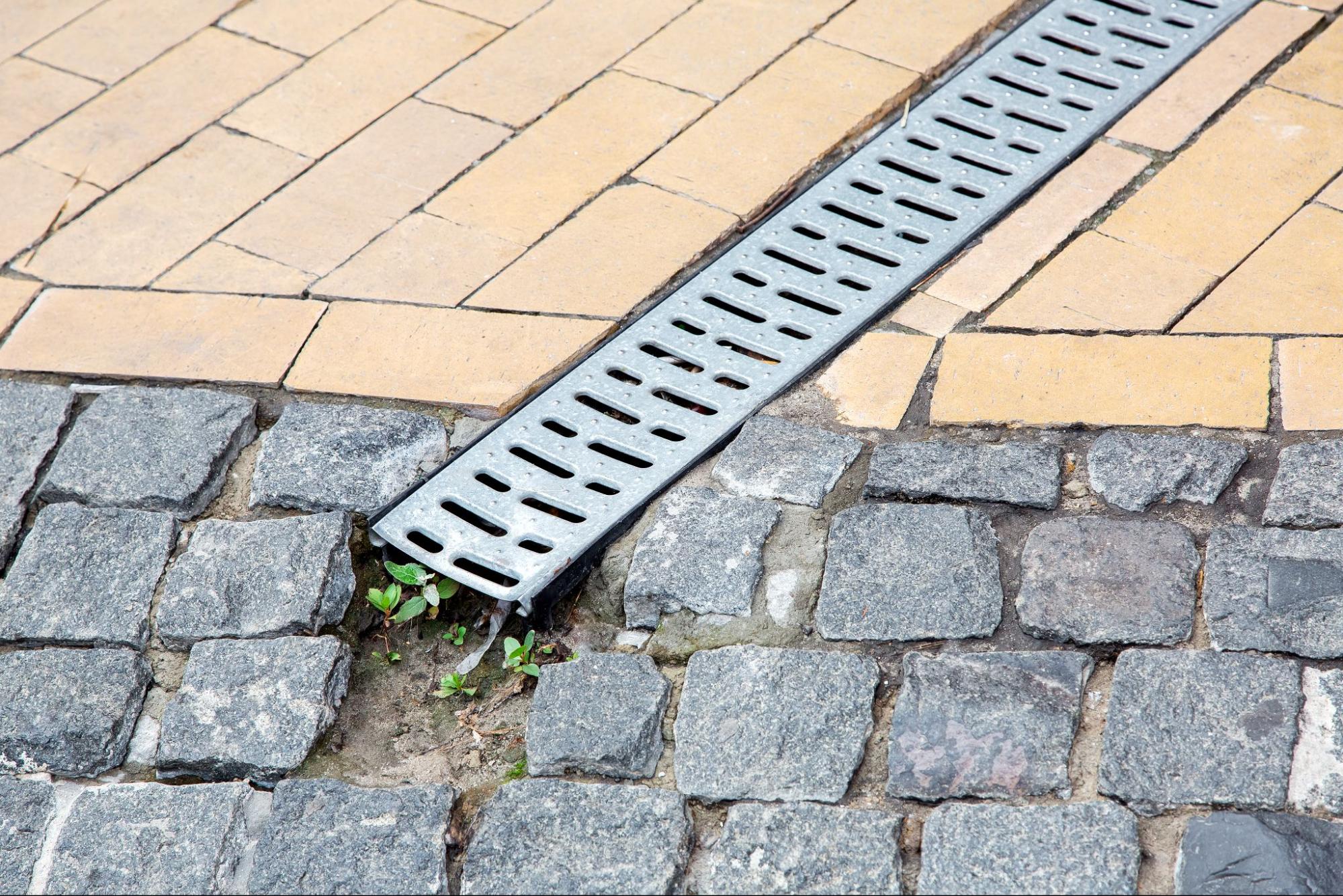
Channel drains provide a long, narrow collection point rather than relying on one small inlet. They work well where runoff reaches an entire patio edge at once.
For example, a channel drain may sit between a patio and a garage opening, along a pool deck transition, or near another hardscape section where water should not continue traveling. Because the opening extends farther, it can intercept sheet flow moving across the pavers.
Placement still matters, though. A channel drain positioned slightly higher than the surrounding low point will leave water behind. The surrounding surface needs to feed the drain rather than forcing water to climb into it.
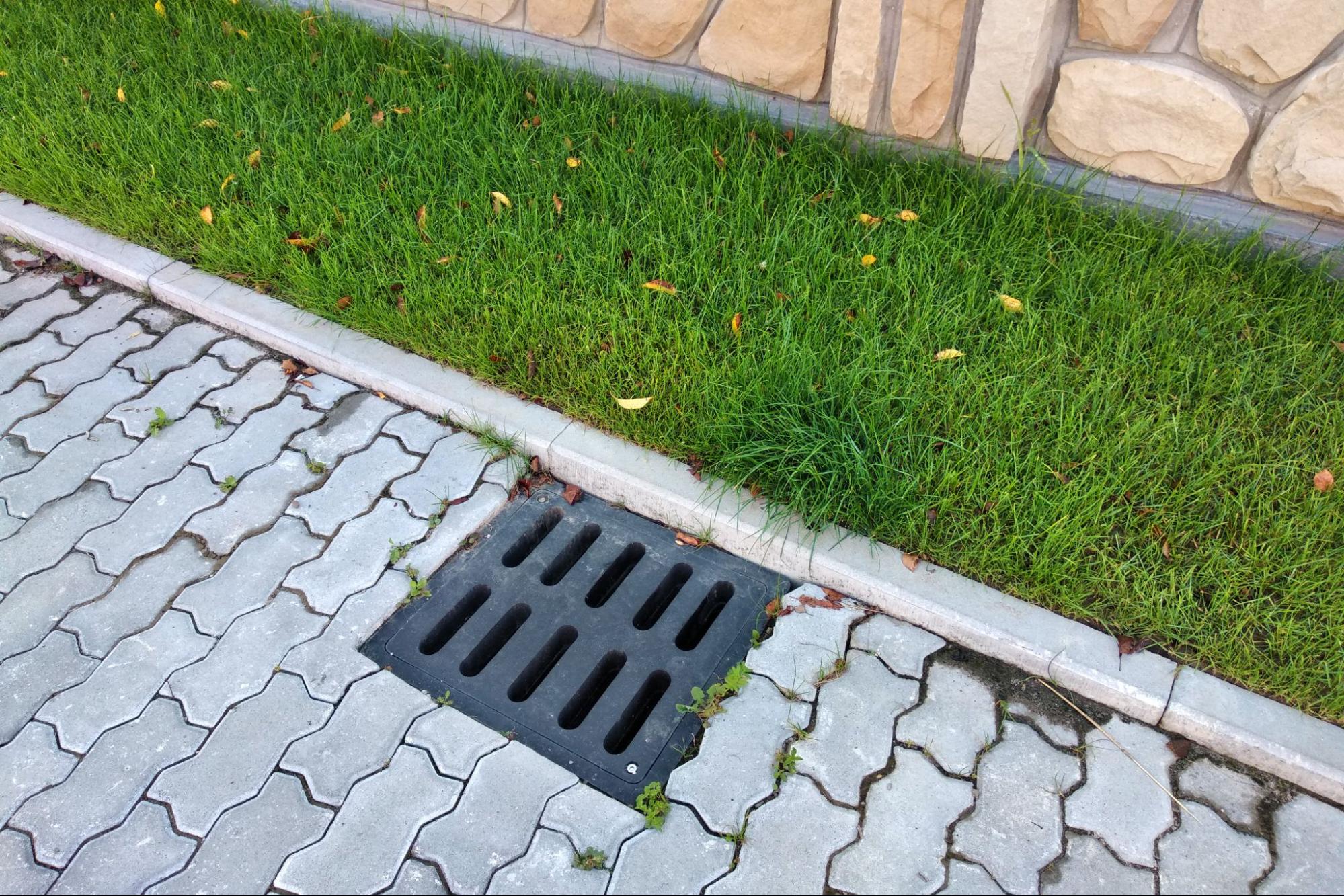
Catch Basins Handle Concentrated Low Points
A catch basin collects water at a specific location rather than along a long line. It can make sense where several slopes converge or where surrounding conditions naturally direct runoff toward one spot.
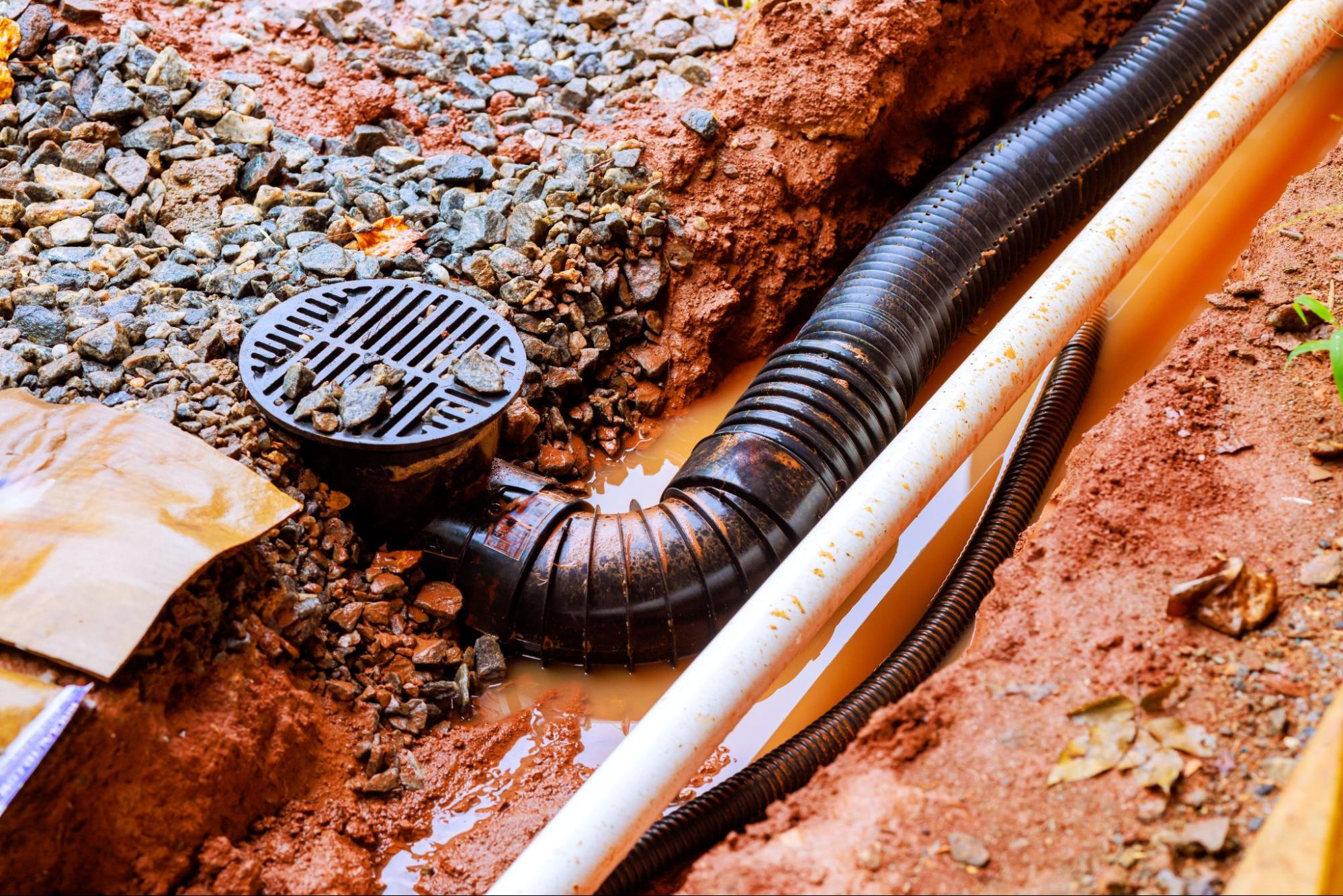
However, the basin is only the collection point. The connected pipe still needs adequate fall and an acceptable outlet. Without those pieces, the basin simply becomes another place for water to sit.
The inlet also needs to remain accessible for cleaning. Leaves, mulch, and landscape debris can accumulate on the grate, so burying a basin where routine access becomes difficult creates an unnecessary maintenance headache.
Roof Runoff Can Overwhelm an Otherwise Good Patio Layout
When figuring out how to drain a paver patio, do not look only at rain landing directly on the pavers. Roofs can deliver a surprising amount of additional water to one concentrated location.
One inch of rainfall on 1,000 square feet of roof produces roughly 623 gallons of water. If a downspout releases a portion of that volume beside the patio, the drainage layout suddenly has to handle much more water than the patio's square footage suggests.
Redirecting a downspout may therefore accomplish more than adding another surface drain. The source of the water matters, and controlling concentrated runoff before it crosses the patio can simplify the entire drainage plan.
Pool Decks Create Their Own Drainage Puzzle
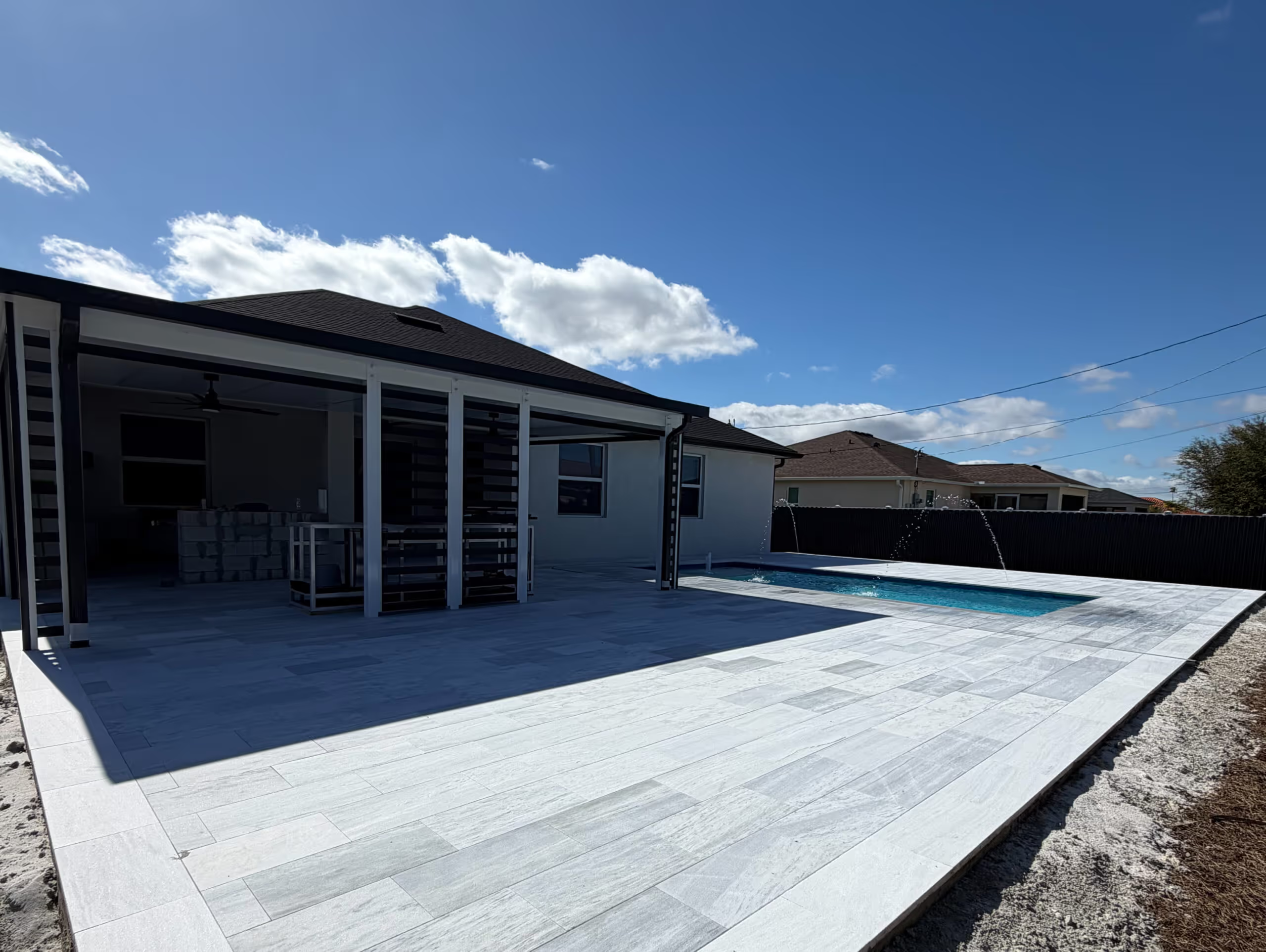
Patios connected to swimming pools require another layer of planning because runoff should not automatically head toward the pool. Rain can carry dirt, landscaping debris, fertilizer residue, and other material across the surface.
The patio may therefore need elevations that guide water toward the yard or a drainage feature instead. Meanwhile, the layout still has to coordinate with the pool coping, doors, screened enclosure, and any connected walkways.
These competing elevations make pool areas a good example of why you can't treat drainage as an afterthought. Several surfaces may need to meet cleanly while sending water in different directions.
What Should Good Patio Drainage Look Like After a Storm?
Successful drainage is often pretty boring to watch, and that is exactly the point. Rain lands, begins moving toward the intended low side, and leaves the main usable surface without creating recurring ponds.
A small amount of temporary surface water during an intense downpour does not necessarily indicate failure. Rain may arrive faster than it can leave for a brief period. The more useful question is whether water continues moving once rainfall slows and whether the same puddles remain long after surrounding surfaces have cleared.
Look at the direction of flow as well. Water should not consistently collect against exterior walls, pour through a doorway transition, or leave the patio only to create erosion immediately beyond its edge.
Avoid Creating a Drainage Problem for the Neighbor
Moving water off your patio is only half the job. The new route should not concentrate runoff onto an adjacent property or create erosion along a shared boundary.
This consideration matters most on smaller lots, where houses, patios, fences, and property lines sit close together. A few inches of elevation change can determine where a substantial amount of stormwater flows.
Planning should therefore consider the entire path from the patio to the final discharge area. Patio water drainage works best when it solves the issue on your property without simply transferring the same volume somewhere inappropriate.
Give Every Gallon Somewhere to Go
Good drainage is less about adding hardware and more about controlling elevation. A carefully planned patio uses slope to move water first, then incorporates drains where the site actually calls for them.
At Elite Pavers Solutions, we evaluate elevations, surrounding runoff, patio placement, and potential discharge routes when planning new paver projects. Contact us today to discuss your patio and request an estimate so we can consider surface design and water flow together from the beginning.
Frequently Asked Questions
Can outdoor furniture interfere with patio drainage?
Furniture normally has little effect on runoff, but large storage boxes, outdoor kitchens, planters, and other items with broad bases can interrupt shallow surface flow when placed directly across a drainage path. Leave intentional flow routes open, especially near low areas and drain inlets where water needs unobstructed access.
Should landscape mulch sit directly against the edge of a paver patio?
It can, but the landscape bed should not continually wash mulch or soil onto the paving during rain. Loose material can collect along low edges and drain openings, so maintaining suitable bed elevations and containing easily displaced material helps keep the intended runoff route clear.
Can adding a screen enclosure change patio drainage?
Yes. Footings, enclosure tracks, and other new components may cross existing runoff paths or affect how water leaves the paved area. If you plan an enclosure after the patio is complete, review drainage beforehand so new construction doesn't block a route the original surface depends on.
When Surface Slope Is Not Enough
Slope and drain placement handle many patio drainage situations, but some properties need a way to manage water within the surrounding soil. Next, read French Drains Explained: Costs, Mistakes, and When NOT to Use One to learn where French drains make sense, what determines their cost, and why they are not the answer to every wet yard.
GOT A PAVER PROJECT IN MIND?
Free estimates across Cape Coral, Fort Myers, Naples and beyond.

.webp)